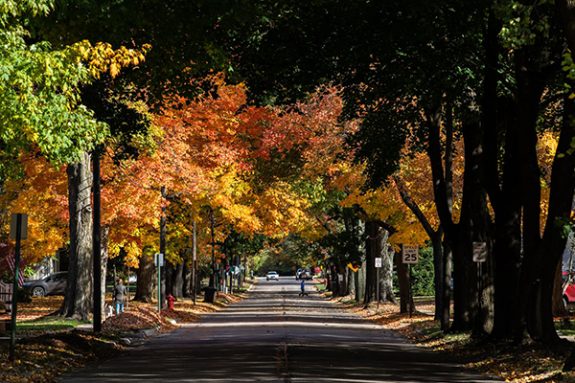
As autumn leaves start falling onto lawns across Michigan, the usual response is to grab a rake, stock up on leaf bags, and spend hours over the weekend clearing the yard. But according to the Huron River Watershed Council, there’s a better, lower-effort option: skip the rake and leave the leaves.
Why Leave the Leaves?
Fall leaves are rich in nutrients. When shredded by a lawn mower, they decompose into a natural fertilizer for grass. Spread 3 to 5 inches deep around garden beds, leaves act as free mulch that suppresses weeds, retains soil moisture, and feeds plants.
“If you have a mulching mower, chew them up,” said Bert Cregg, a forestry professor at Michigan State University, in a 2024 article from the Michigan Department of Environment, Great Lakes, and Energy (EGLE).
Keep Leaves Out of Storm Drains
Leaves that go into storm drains travel directly to local waterways without treatment. They can also clog grates and contribute to street flooding. Keeping leaves out of the drains helps protect local infrastructure and water quality.
Options If You Can’t Leave Them All
If there are too many leaves in your yard to skip raking entirely, consider these alternatives:
- Mow and mulch. Pass over dry leaves with a mower (a mulching blade works best) to break them down into fine pieces that settle neatly into the grass.
- Move them into garden beds. Rake excess leaves directly around trees, shrubs, and flower beds as protective mulch. You can wet them down to prevent the wind from blowing them back into the yard.
- Compost them. Add leaves to a compost pile or bin to create nutrient-rich soil conditioner for next spring. Washtenaw County offers composting tips.
- Use city leaf collection. Residents in the City of Chelsea who need excess leaves removed can use curbside leaf pickup, which runs Oct. 19 through Nov. 25. Rake leaves to the lawn extension, keeping them out of the street.
To learn more, visit the Huron River Watershed Council’s lawn care page or EGLE’s article on the no-rake approach.
Sources: Huron River Watershed Council and EGLE